

The Fourth National Arctic Scientific Research Expedition (TASE–IV), to be carried out under the auspices of the Presidency, organized by the Ministry of Industry and Technology, and coordinated by TÜBİTAK MAM KARE, has begun. .
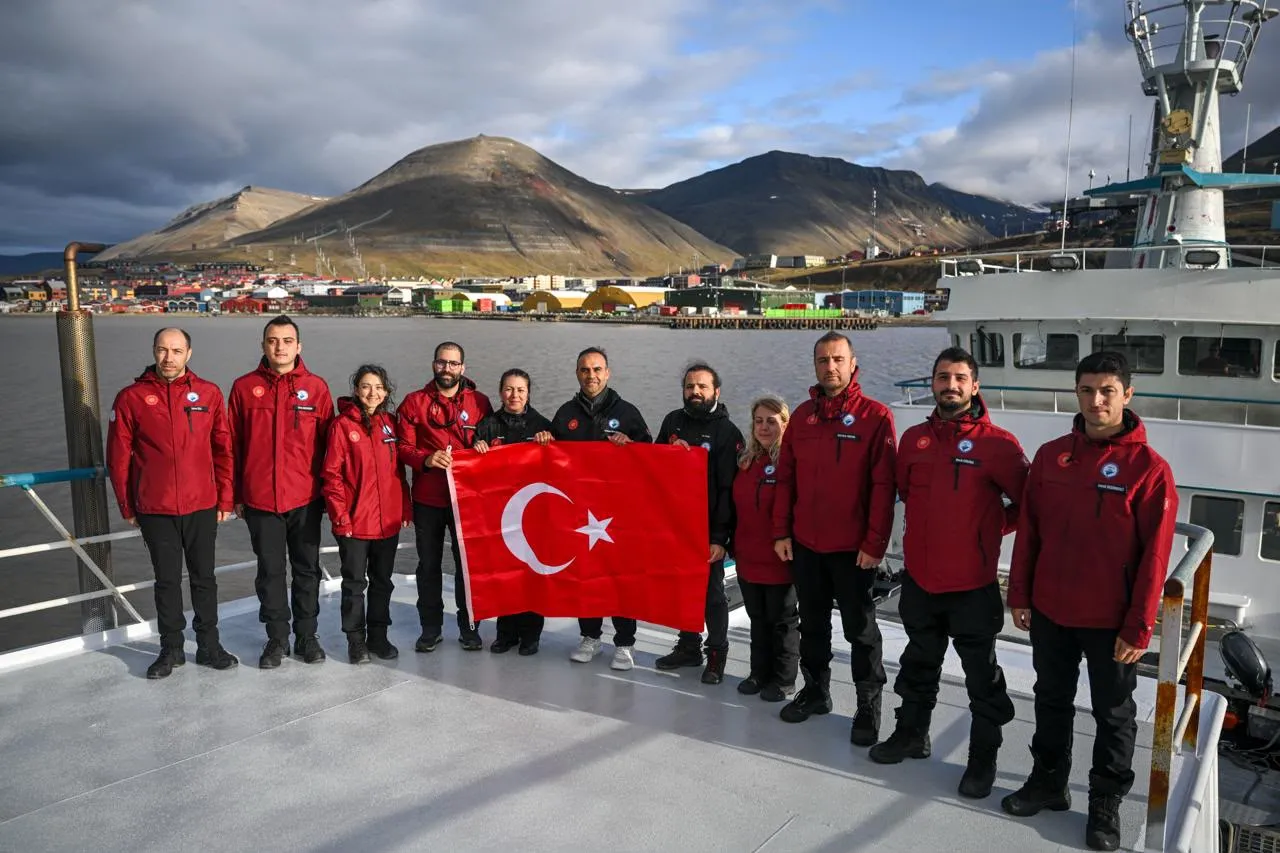
As part of TASE–IV, which will be held for the fourth time this year, the Turkish Science Team, which set out from Istanbul to Oslo on June 26, 2024, traveled from Oslo to the city of Tromsø in Norway. The team boarded the Norwegian-flagged scientific research vessel “R/V PolarXplorer” (Ice Class 1C) and will begin its expedition at 71 degrees latitude. During the expedition, 16 projects will be carried out. Samples will be collected at 24 stations to advance scientific research. According to the plan, after reaching the sea ice boundary, the team will begin the return journey, concluding the expedition on July 25, 2024, in the city of Longyearbyen on the Svalbard archipelago. From there, the Turkish scientific team will return to Turkey with the scientific samples.
The expedition team consists of a total of 11 people, including 9 Turks and 2 visiting researchers from Bulgaria and Chile. Dokuz Eylül University, Istanbul University, Istanbul Technical University, Karadeniz Technical University, the General Directorate of Meteorology, Middle East Technical University, the Directorate General of Navigation, Hydrography, and Oceanography, TÜBİTAK, the Bulgarian Antarctic Institute, the Italian Institute of Polar Sciences, the Chilean Antarctic Institute, and the University of Austral in Chile.
National Polar Research contributes to efforts to strengthen our country’s presence in decision-making bodies within international organizations and to enhance the scientific prestige of the Republic of Turkey. At the same time, the National Polar Science Expeditions and Activities carried out through the National Polar Research Institute demonstrate that our country possesses strong scientific potential not only within its own borders but also on a global scale.
The Arctic region, which covers an area of 20 million km² and includes the Arctic Ocean, is home to one-third of the world’s hydrocarbon reserves. As sea ice recedes due to global climate change, marine life is migrating to these regions, while at the same time, new shipping routes are emerging in the Arctic Ocean, leading to the region’s growing importance in terms of maritime trade. These new maritime trade routes, known as the Northern Sea Routes, offer economic benefits because they are shorter than traditional routes.
Thanks to the continued acceleration of scientific activities in the region under the Svalbard (Spitsbergen) Treaty, the continued and accelerated scientific activities in the region are laying a solid foundation for our country to attain Observer State status in the Arctic Council, which is responsible for determining the organized management and security of the region in accordance with its unique conditions. Through the work our country has carried out since becoming a party to the Svalbard Treaty and by playing an active role in determining the region’s management and security after gaining Observer State Status in the Arctic Council, our country is establishing its presence in Global Arctic Regional Policies, and to ensure it enhances its rights regarding the region on the international stage, the necessary tasks and procedures are being carried out under the auspices of the Presidency, under the responsibility of the Ministry of Industry and Technology, and coordinated by the TÜBİTAK MAM Polar Research Institute.