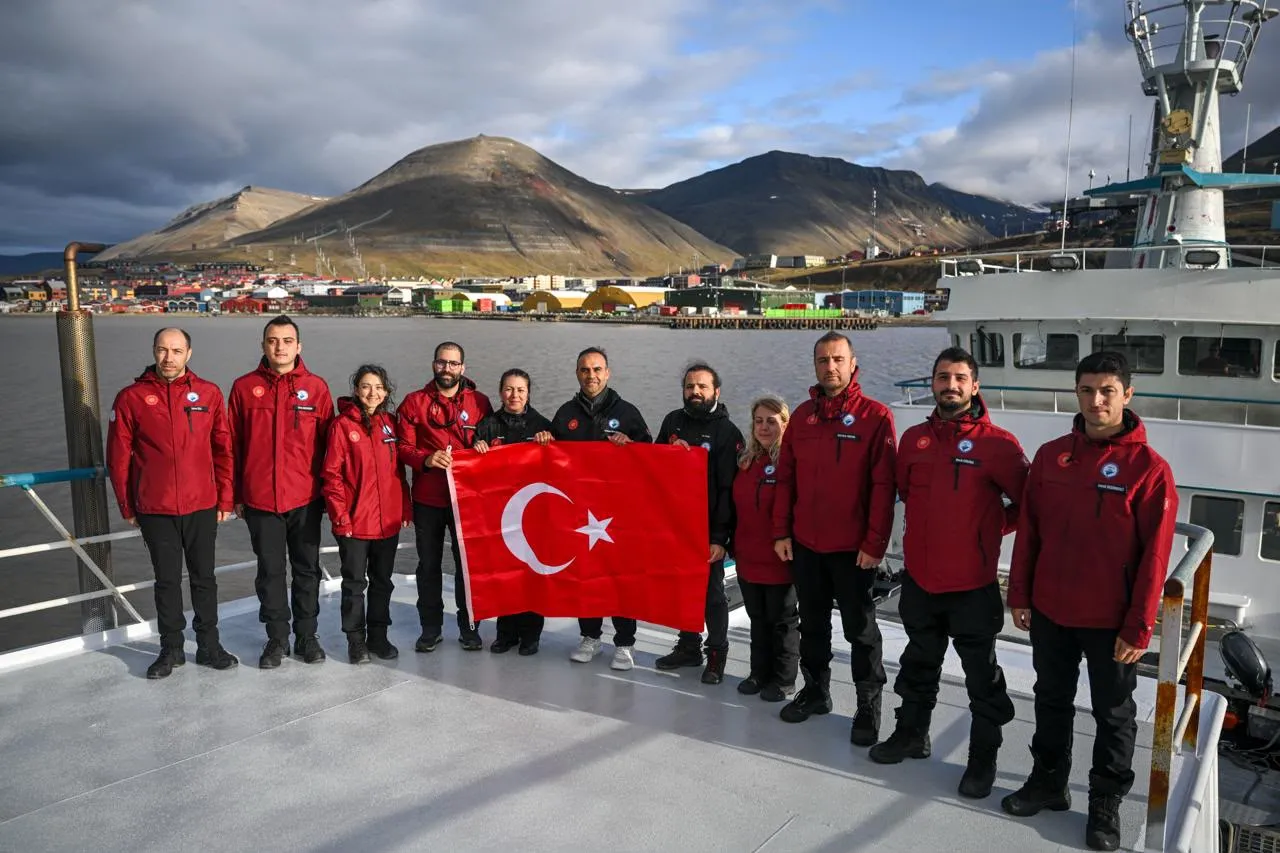


The team that participated in the 8th National Antarctic Science Expedition—held under the auspices of the Presidency, organized by the Ministry of Industry and Technology, and coordinated by the TÜBİTAK MAM Institute of Polar Research—arrived in Istanbul after a long journey.
The Eighth National Antarctic Science Expedition, which began in Istanbul on January 27, was completed on March 2. A 24-member expedition team—comprising 20 Turkish scientists, two researchers from Spain, one from Bulgaria, and one from the United States—carried out their projects during the expedition.
Seven institutions and 14 universities from Turkey were represented on the expedition, which aimed to ensure the sustainability of international collaborations and highlight the importance our country places on the polar regions through the effective use of science diplomacy; Turkey’s Ambassador to Buenos Aires (Argentina), joined the expedition. Budak paid official visits to the scientific research stations of other countries on King George Island.
In addition, three Turkish researchers participated in Antarctic scientific expeditions organized by Bulgaria, Ecuador, and Colombia.
In addition, three of our high school students, who won first place in the Polar Research Projects Competition launched last year by TÜBİTAK BİDEB as part of TEKNOFEST, joined our Antarctic team. This marks the second time TÜBİTAK has included high school students in an Antarctic expedition.
During the expedition, 22 separate scientific projects were conducted at our temporary base on Horseshoe Island at 68°S in Antarctica, covering a wide range of topics—from glacial retreat to ocean tides, atmospheric conditions to microplastic measurements, and geological structures.
In addition to scientific projects, maintenance and upkeep work was carried out at the Turkish Scientific Research Camp on Horseshoe Island as part of the expedition, and various observations and measurements were conducted as part of long-term monitoring efforts. Maintenance was performed on our GNSS and meteorological stations, and work continued on developing bathymetric maps of Horseshoe Island and its surroundings.