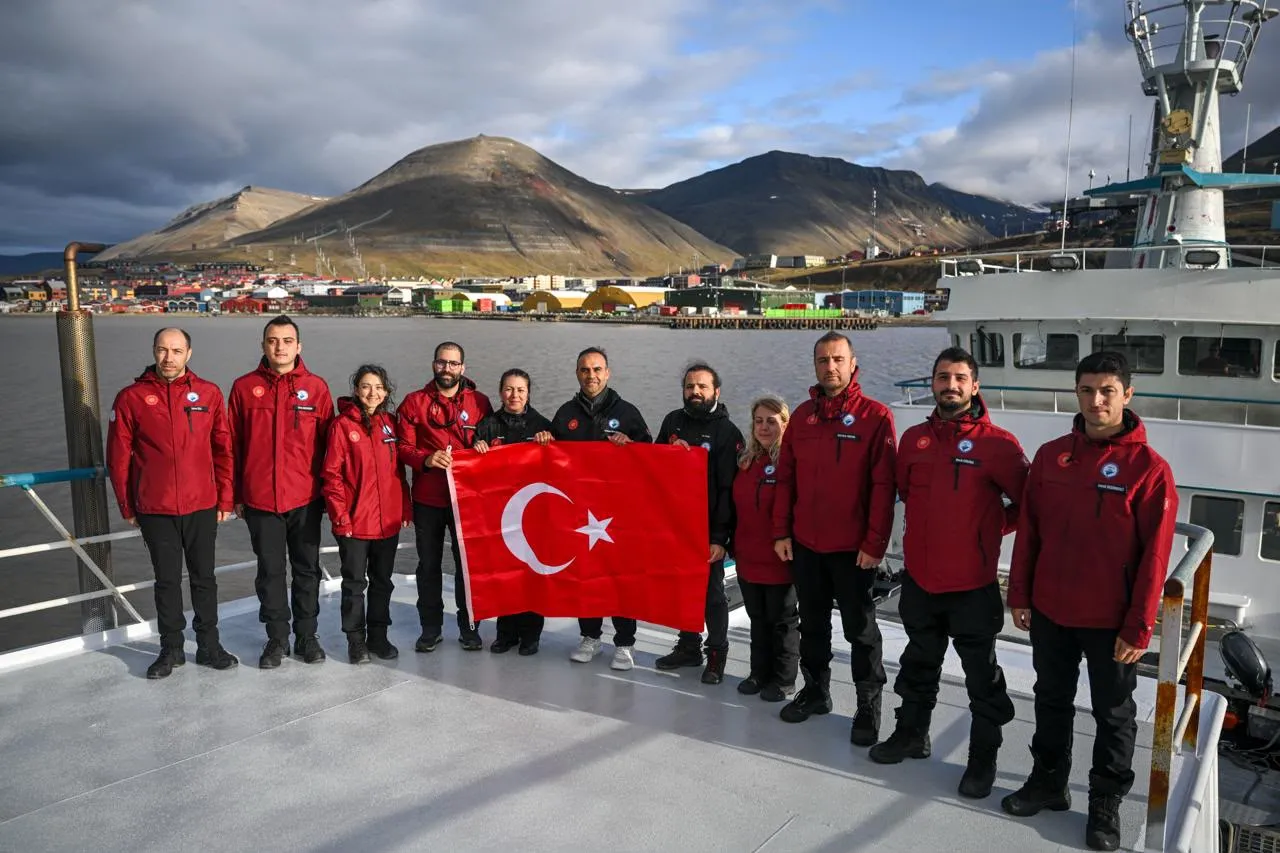

The team participating in the 9th National Antarctic Science Expedition—held under the auspices of the Presidency, organized by the Ministry of Industry and Technology, and coordinated by the TÜBİTAK MAM Institute of Polar Research—has returned home after a 34-day journey. After departing from Istanbul Airport on February 6, the team reached Antarctica following a 60-hour journey via Brazil and Chile, and returned to Turkey via the same route.
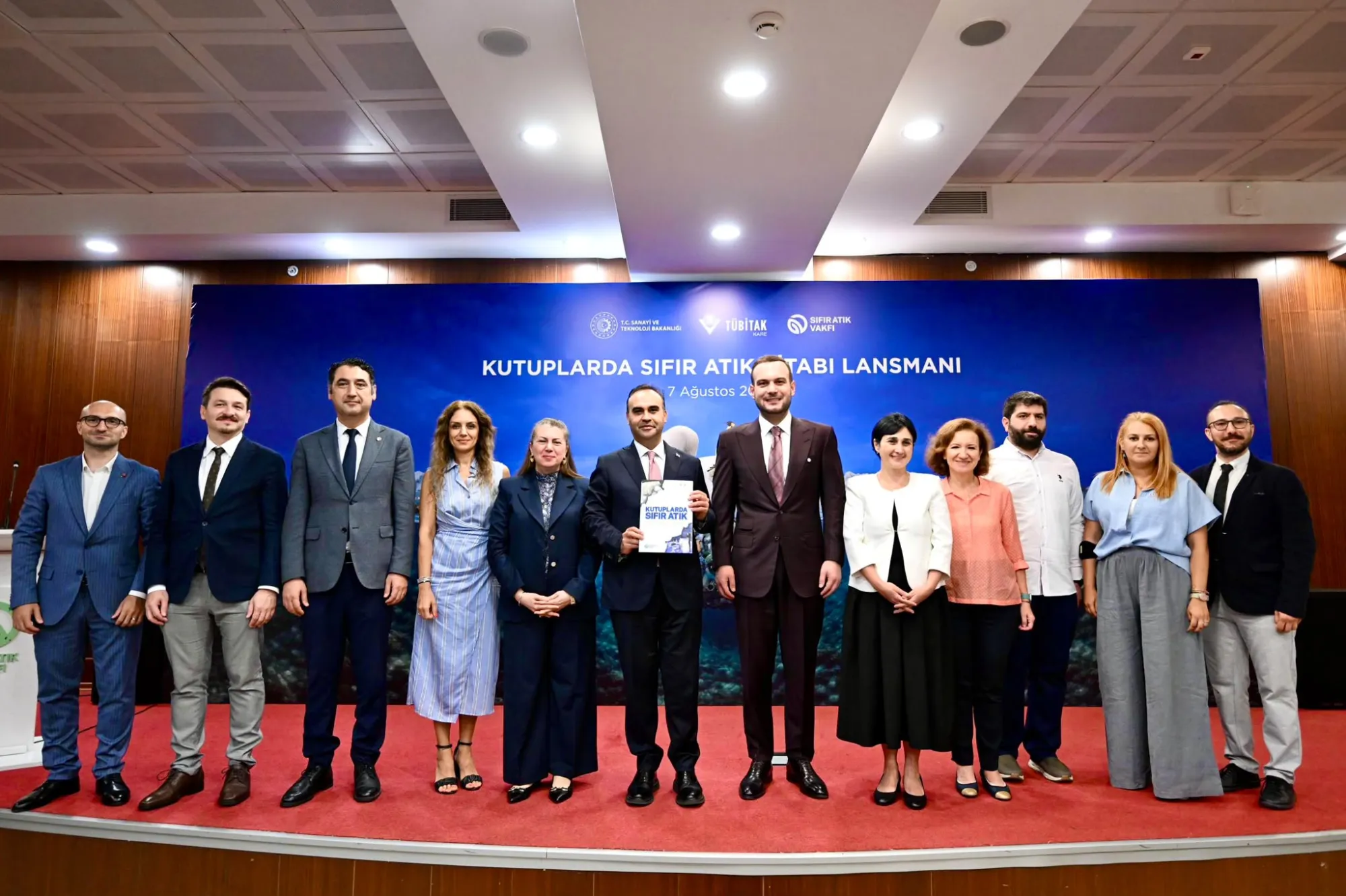
After completing their work on Horseshoe Island, the scientific team finished maintenance and upkeep work on the fixed Global Navigation Satellite System (GNSS) station on Dismal Island—one of the first stations established by Turkey outside its borders. The participants then embarked on a stormy, rough, and snowy sea voyage from Adelaide Island, passing through the Grandidier Channel, the Penola Strait, and the Le Marie Channel, first reaching Deception Island and then King George Island. Due to adverse weather conditions that prevented flights, the scientific team was forced to wait for a month aboard the Chilean-flagged vessel Betanzos—which served as their living quarters—until weather conditions improved. During the wait, the team spent their time making final preparations for their projects, assisting with the preservation of their samples, and socializing. The 20-member team, which was sent off to the White Continent at a ceremony attended by Minister of Industry and Technology Mehmet Fatih Kacır, first flew from King George Island to Punta Arenas, Chile, upon their return. The delegation arrived in Istanbul after a 14,700-kilometer journey. Officials and family members welcomed the scientific team at Istanbul Airport. The team, returning from Antarctica, spent a long time catching up with their loved ones. It was noted that some families had even brought their pets to the welcome ceremony.
Work was carried out under 5 main headings and across 19 projects
This year, the science team continued its work under the “National Polar Science Strategy,” focusing on five main areas identified as priority scientific themes of national and international significance. Under the strategy, the goal is to “identify research priorities for the years 2023–2035 at the general thematic and sub-thematic levels to maximize the benefits for all stakeholders in the polar ecosystem and the public interest,” 19 separate projects were carried out under the themes of “global climate change,” “threatened ecosystems,” “anthropogenic impacts and social systems,” “looking from the past to the future,” and “looking toward space.” On Horseshoe Island, where Turkey’s scientific research camp is located, a team—including four foreign researchers—worked on producing new bathymetric maps, collecting data from newly established near-space observation stations and geodetic stations, conducting space observations, researching the environment, pollution, and wildlife, taking meteorological measurements, and studying aquatic ecosystems.