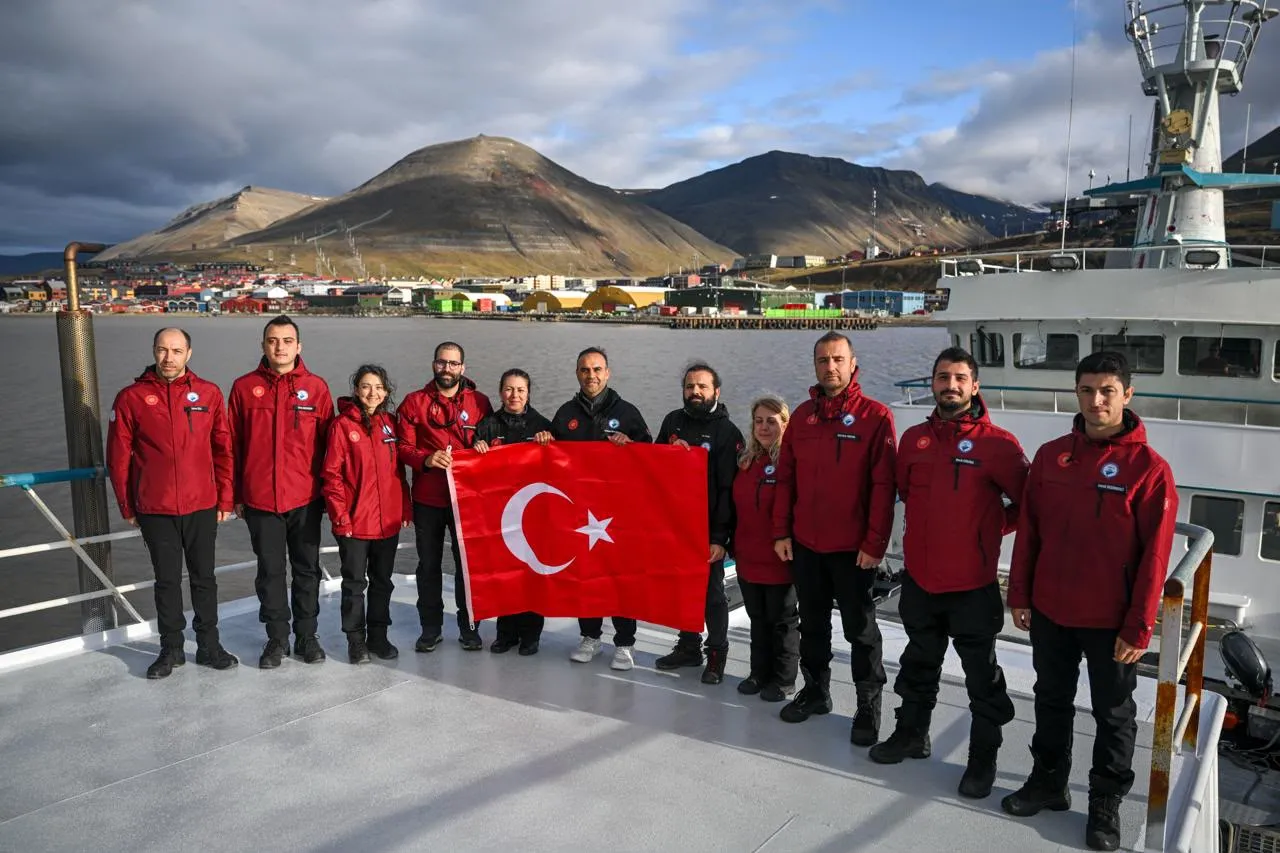

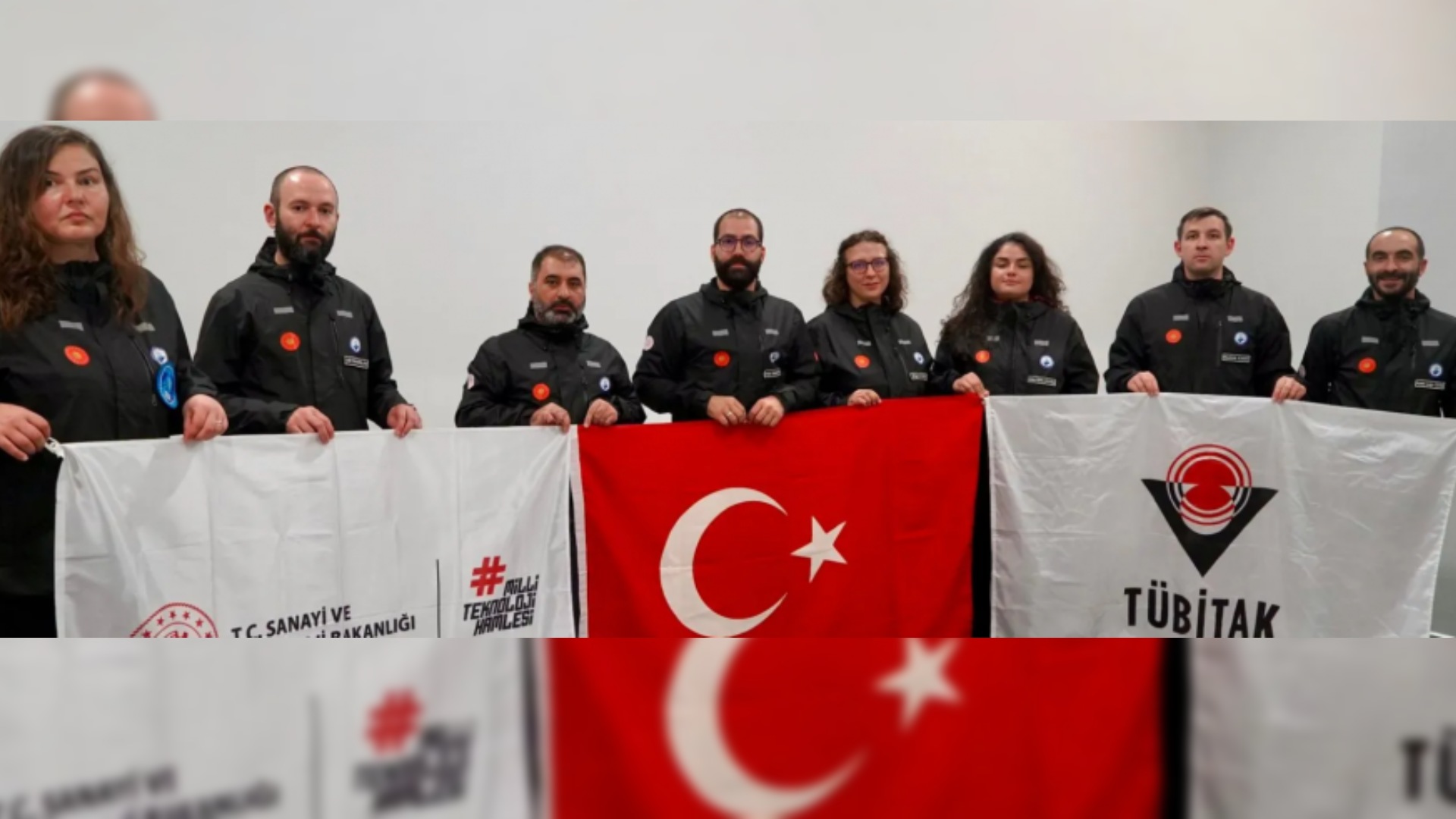
During the expedition, which took place from July 8 to 31, 2025, a total of 12 researchers—9 from Turkey and 3 from other countries—conducted significant scientific research in and around the Arctic Ocean. Researchers from Argentina, Bulgaria, and Ecuador also contributed to the scientific research.
19 Projects, 12 Researchers, 3 High School Students
During the expedition, a total of 19 scientific projects were carried out, primarily in the fields of oceanography, biology, chemistry, atmospheric science, meteorology, and satellite systems. The work was conducted by an expedition team consisting of 5 women and 7 men. The expedition was successfully completed along a route of more than 3,000 nautical miles, covering 70 designated scientific sampling stations in the Arctic Ocean.
TASE V also hosted young scientists this year. Three high school students involved in three different projects—selected from among the winners of the TÜBİTAK 2204-C and 2204-D High School Student Research Project Competitions—had the opportunity to test the projects they developed under Arctic conditions.
Scientific Observations: Atmosphere, Microplastics, CTD Profiles
As part of the research in the Arctic Ocean; the analysis of seawater properties along CTD profiles, measurements of surface temperature and salinity, water and sediment sampling, microplastic analysis, monitoring of atmospheric processes using GNSS data, and observations of meteorological variables on regional and temporal scales were carried out.
The TASE V project also included researchers from 2 public institutions, 5 universities, and 3 high schools.
Turkey’s Arctic Vision Is Gaining Momentum
The Arctic Region, which is directly linked to many fields such as global climate change, marine sciences, life sciences, and meteorology, holds strategic importance in Turkey’s scientific diplomacy and sustainability policies.
Organized under the coordination of TÜBİTAK MAM KARE, the National Arctic Scientific Research Expeditions aim to strengthen our country’s scientific capacity in polar regions and enhance international scientific collaborations. In this regard, the expeditions regularly conducted in the Arctic are making Turkey’s scientific presence even more visible on a global scale.